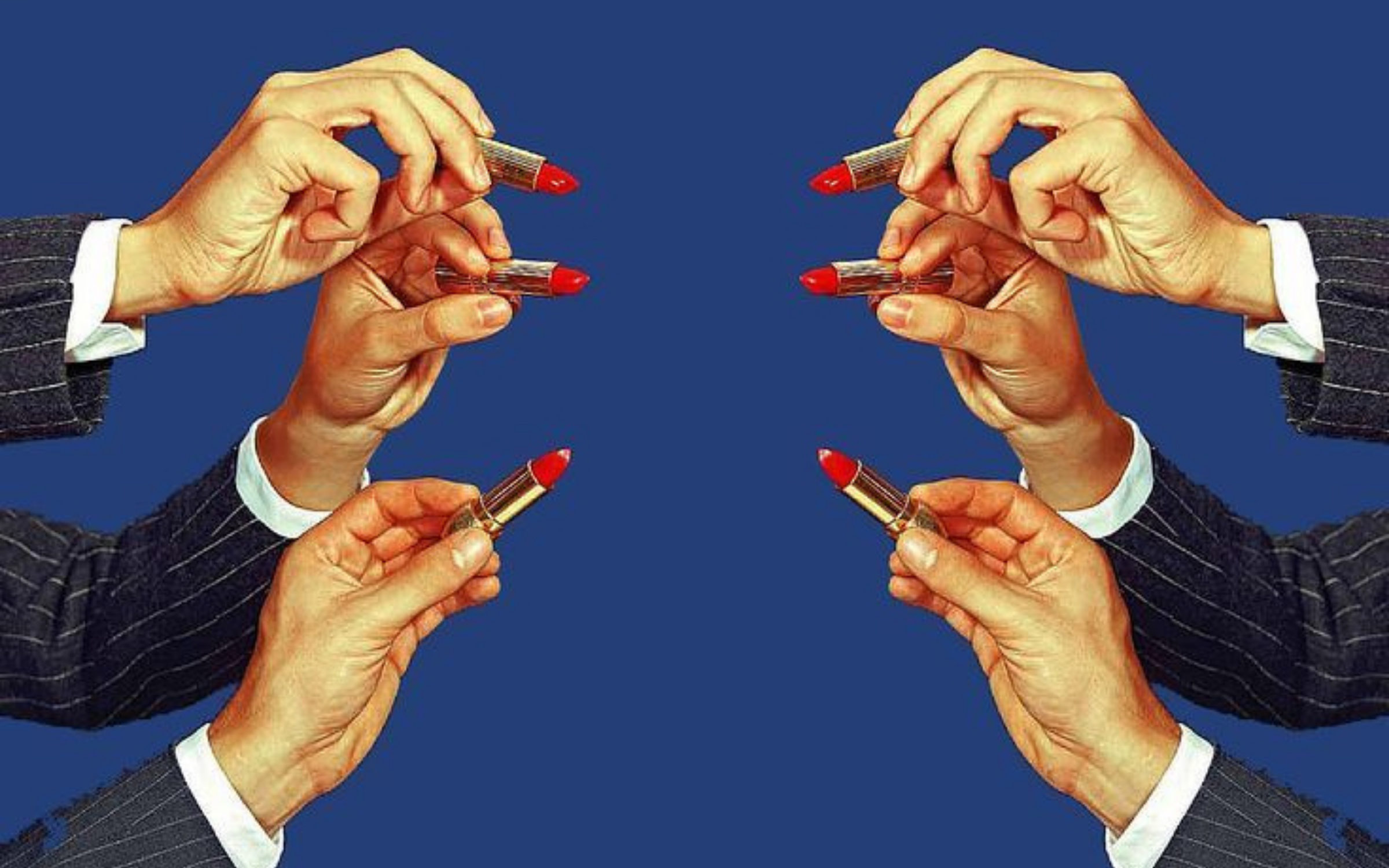
I am sorry to disappoint you if you thought the Lipstick Effect is a new trend but do not leave yet. It’s actually a fascinating theory about how beauty and economics influence one another. Don’t worry, I’m not an economist, and I promise to keep this short and light.
When I first came across the topic, it instantly became my favorite conversation starter when talking to fellow beauty lovers. I’ll walk you through the concept and share my thoughts on how it has evolved over the years. Ready for your next go-to ice breaker at social events?

What Is The Lipstick Effect?
The Lipstick Effect suggests that people tend to buy more lipsticks during difficult times. That might sound a bit contradictory, because when life gets tough, our first instinct is usually to cut back on anything non-essential. But a luxury lipstick can offer a small moment of joy. It’s a tiny symbol of well-being and a way to feel a little more put-together.
Pulling a Tom Ford or Guerlain lipstick out of your bag can spark a conversation. It quietly says, “Things may be rough, but I still can treat myself.” Interestingly, sales of beauty products used mainly at home, like face cleansers and creams, tend to drop in such times. This strengthens the idea that people want something visible, something they can wear outside and be seen with.
The effect was first described by economist Juliet Schor in 1998, but it was Leonard Lauder, former CEO of Estée Lauder, who gave it the name. He noticed that lipstick sales surged during the 2008 recession. Looking back, similar patterns appeared after the events of 9/11.
The History of The Lipstick Effect

Beauty Today
The beauty world has changed a lot. From how we shop to the sheer number of products available, many factors have influenced how the Lipstick Effect shows up today.
Shopping Experience
In the past, someone might see an ad for a lipstick and head straight into the store to buy it. That’s no longer the case. I can’t speak for everyone, but I research everything before I make a purchase. I look at swatches online, scroll through social media reviews, compare prices and even then, I don’t buy it right away. Often, it’s on some random Thursday night that I decide, “Okay, now is the time.”

Trends
Trends like the clean girl aesthetic have shifted the spotlight from classic bullet lipsticks to products like lip oils and nourishing lip treatments. On top of that, viral movements like the underconsumption core have encouraged people to appreciate what they already own instead of constantly chasing the next new thing.
Shift To Other Categories
Wellness and mental well-being are more important than ever. Topics like gut health, stress reduction and mindful living have become central to how we take care of ourselves. Today, self-care isn’t just about applying a face mask once a week and going for a walk. It goes deeper.
During the pandemic, many of us had to rethink even the simplest routines. Suddenly, things that used to be easy felt complicated, and we looked for new ways to feel good and reward ourselves. That reward doesn’t always look like a new lipstick anymore. Sometimes, it’s an overpriced kale smoothie from a café, a jar of organic kimchi from a local brand or a book about how to stop overthinking.
My Perspective
I still believe there’s a strong link between beauty products and the economy. But lipsticks are no longer the only indicator. The Lipstick Effect is still relevant, but it’s evolving. Just like us.
Beauty today reflects not only how we want to be seen but also how we want to feel. Confident, resilient and in control, even when the world around us feels uncertain.
So, when was the last time that you purchased a lipstick or any other product to treat yourself? Let me know down in the comments.

Leave a Reply